Creative lifestyles community. Inspiring creativity one lifestyle at a time. Cop an étude and see where it takes you!
Follow us on twitter and instagram @etudelife and like us on facebook.
Dramatic conflict is the backbone of quality screenplays. What better ways to raise the conflict in your screenwriting than modulating the tension in your story?
Tension in your writing can be defined as a period of elevated emotional intensity.
Here are some ways to effectively utilize tension in your story:
1) BURSTS OF TENSION
Tension can be either short lived or sustained. In order for tension to be effective in your script, it must be ACTIVATED, SUSTAINED and RELEASED. Prolonged tension will only tire and disengage your audience.
2) MACRO INTENSITY
The levels of tension must be manipulated to hook your audience. Firstly consider the overall level of danger in the story arc.
In the macro story, the tension needs to be escalated in a “SAW TOOTH” format. This is basically the attack-sustain-release model. Think about the set pieces in your story and how they correlate with periods of tension. My preference is for…
Ours is a youth-oriented culture. A glance at the tabloids tells us of the exploits of the young. There is not as much of a platform for the artistic achievements and accomplishments of the older or even the middle aged. We falsely believe that creativity belongs to the young, and so, when we pass a certain age, we tell ourselves we are “over the hill.” We ignore the fact that many artists create well into what might be called their “dotage.”
The idea that creativity fades with age is false.
Twenty-five years ago, I wrote a book on creativity called The Artist’s Way. Over four million people have worked with that book. I have taught many live classes and have often found my just-retired students to be the most poignant. Setting out to write a book on creativity and aging, It’s Never Too Late to Begin Again, I discovered that many of us have a fiery passion we long to express in our golden years. As we turn our hand to the page, crafting a memoir of our time on the planet, many dreams surge to the fore. It is not “too late” to begin their pursuit. Often, our life’s experience gives us a “leg up” in creating meaningful art. Comfortable in our own skin, we may find the gift of candor as a passion that has been brewing for decades pushes to the fore with energy and conviction.
We are taught to believe that negative equals realistic and positive equals unrealistic. Nonsense.
Internalizing these destructive messages, we believe we’re “too old,” decide it’s “too late.” But “I’m too old” is something we tell ourselves to save ourselves from the emotional cost of the ego deflation involved in being a beginner.
In the moment of creation, we are ageless. We feel both young at heart and old and wise. “Artists work until the end,” my photographer friend Daniel said to me recently. Yes, they do. This is why retirement from one career— even if it is our major career—is not, by any means, “the end.” Because the act of creating something, anything, renders us timeless, because the act of creation is led by that inner, youthful part of ourselves, we continually reinvent our lives through our art. The capacity to create is as innate as our very life force. I would even say that our creativity and our life force might be one and the same.
See the original post by KYLAH GOODFELLOW KLINGE at theatlantic.com.
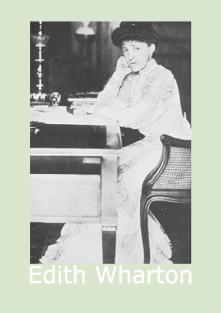
The writer Edith Wharton, a self-professed “slow worker,” dismissed the idea of easy creative triumph. “Many people assume that the artist receives, at the outset of his career, the mysterious sealed orders known as ‘Inspiration,’ and has only to let that sovereign impulse carry him where it will,” she wrote in her 1925 bookThe Writing of Fiction. The artistic impulse, she continued, was instead achieved through “systematic daily effort.”
Photo from creativebuzzing.wordpress.com
But while she championed diligence, Wharton was also driven by something she found more difficult to describe. Writing in The Atlantic in 1933, she sought to explain that “central mystery” of spontaneous creative expression—the “teeming visions which, ever since my small childhood, and even at the busiest and most agitated periods of my outward life, have incessantly peopled my inner world.”
“It is as impossible to fix in words,” she wrote, “as that other mystery of what happens in the brain at the precise moment when one falls over the edge of consciousness into sleep.”
There are many types of creativity, but in recent years, researchers have begun to understand more about the kind of creative flow Wharton described—the state that today is colloquially referred to as “being in the zone.”
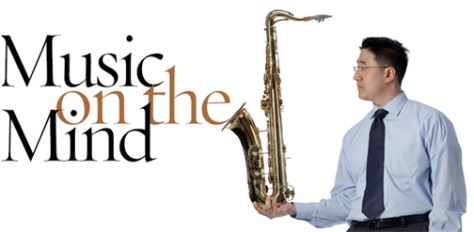
In a 2008 study published in the journal PLOS, Charles Limb, an otolaryngologist at the University of California, San Francisco and accomplished jazz saxophonist,and Allen Braun, a speech researcher at the National Institutes of Health, designed a clever way to observe creative expression in the brain: an fMRI machine with a specially made musical keyboard. The two men recruited six professional jazz musicians for the study; while in the fMRI, the participants performed musical exercises ranging from a memorized scale to a fully improvised piece of music.
Observing the musicians’ brain activity as they performed each task, Limb and Braun found that when their subjects improvised, a region called the dorsolateral prefrontal cortex (DLPFC) became less active. Like a neural mother hen, the DLPFC is connected to planning, inhibition, and self-censorship; its deactivation has been suggested to play a role in altered states of consciousness such as daydreaming, meditation, and REM sleep. (A separate imaging study published in the journal Nature in 2012 found a similar lulling of the DLPFC during freestyle rap.) This pattern of brain activity, Limb and Braun wrote, may be “intrinsic to the creative process,” which “can apparently occur outside of conscious awareness and beyond volitional control.”
Their findings support a fundamental model of creativity developed by Arne Dietrich, the author of and a professor of psychology at the American University of Beirut. Dietrich argues that the brain’s prefrontal cortex is central to creativity, and depending on the particular creative activity, the region will either significantly slow—as it did in the jazz study—or ramp up.
In other words, creativity is necessarily a variable phenomenon. At times, it’s the composer’s strict pen: intentional, revisionary, critical. And at times, it’s the spontaneous new melody: unconscious, experiential, flexible. So what determines which creative path a person takes in a given moment?
Earlier this year, Limb co-authored a new study led by Malinda McPherson, a doctoral candidate at the Harvard-MIT Program in Speech and Hearing Bioscience and Technology, to address that missing element. The study also asked jazz pianists to improvise in an fMRI scanner; this time, though, the musicians were instructed to first review photographs of a woman wearing a positive, negative, or neutral expression, and then to try to match the photo’s mood with their improvised melodies.
The results were somewhat surprising. McPherson’s team predicted the creativity-related DLPFC deactivation from the previous study would be found equally in the negative and positive improvisations, but it was much more pronounced during the happy trial. The researchers also found that the negative-photo improvisations showed greater activity in certain brain regions connected to cognitive control and reward; specifically, there was increased connectivity between the insula, an area that controls visceral awareness, and the substantia nigra, an area responsible for reward and pleasure.
Broadly, McPherson’s findings support Dietrich’s argument that creativity doesn’t stem from one easily definable process or brain pattern. The results also indicate that “emotion has a huge effect on the way our brains can be creative,” McPherson says. Positive emotion, for instance, seems to be related to a deeper state of creative flow. Her findings also seem to indicate that unhappy artistic expression requires more conscious restraint than happy music—but may also be, on some level, more rewarding.
“Sadness in art is perplexing,” McPherson says. “People love performing and listening to sad music, but generally try to avoid sadness in other areas of their lives.” It may be that the arts give us the chance to safely practice and experience a range of emotions, she says—or, as Wharton writes, to experience feelings “quite unrelated to the joy or sorrow caused by real happenings, but as intense.” Sad music, then, could be especially pleasurable because the musician “knows that the sadness is coming from the art, and not from any other loss,” McPherson speculates. Happy art, on the other hand, may allow a deeper creative flow because it carries less emotional risk, even if it also means less of a reward or release.
But Dietrich advises caution in extrapolating too much from McPherson’s study or any neuroimaging research on creativity. “Even for the wilderness of human thinking, creative ideas seem to be deliberately designed to defy empirical enquiry,” he says, adding that some ideas pitched as neural explanations for creativity have “completely failed” to produce coherent results. Dietrich remains skeptical that fMRI-bound improvisations are an accurate representation of truly freewheeling creative flow. Even so, he says, the McPherson study is a “genuine addition to the literature.”
Of course, the more questions that are answered, the more questions arise: Do the findings about jazz improvisation apply equally to other forms of art and music? If there are distinct paths to creativity, how can we steer our brains to enter a state of creative flow? What happens to the brain during those more deliberate creative efforts, such as revising an artistic work?
Southern Komfort Brass Band December 23, 2014 at Duling Hall in Jackson MS. Photo Credit: LaTonya Miller
As they move forward, Limb and his colleagues are working to both deepen their understanding of musical improvisation and extend the research to other areas of creativity. “There are so many deep and critical questions when it comes to the neuroscience of art,” he says. “It may take a while before we are able to unify the knowledge across disciplines.”
Mason jars are absolutely adorable and totally useful! Since I’m quite obsessed, I find ways to incorporate them on The Chic Site and in my home as much as possible. I’m sure, like me, you end up accumulating a variety of jars in your house throughout the week. Instead of recycling them, or worse tossing them out, try one of these creative ways to put them to good use. Continue reading From Huff Post: 13 Creative Ways You Could Be Using Mason Jars | Rachel Hollis→
At a time when it’s so easy and convenient to whip out a smart device to jot down an idea or take notes, it’s refreshing to see that the good ol’ notebook hasn’t gone completely out of style. In this Creative Spark segment, writer and director Tina Gordon Chism (Drumline, ATL, Peeples) talks about her passion for the “slow burn” of Continue reading Writer Director Tina Gordon Chism on the Creative Process→
David Banner was in town for his foundation last week. He came to speak to the kid at the Juvenile Detention Center and open up new studios at the YMCA in Jackson MS. Jessica Simien got a chance to sit down with him to discuss his intention for putting the studio in the YMCA and how the kids can benefit from it. He also spoke about how Mississippi artist need to create our own sound. I agree we do need to identify a unique style to stand out from the crowd, so we can carve out a legacy for generation to come out of Mississippi. He said artist need to speak life with the words they use to write rhymes. Check out the full article at JessicaSimien.com. Links are under the video.
Creativity (formerly a print magazine, now a website) rolled out the first “Creativity 50” list during their 20th Anniversary in 2006. Ten years in, the dynamics of the list seem to have shifted. In the beginning the majority of those who made the list were from the advertising and design world. This year, however, only 16% of the list falls into the advertising category while 42% of the list is comprised of creatives from the entertainment world. Continue reading The Creativity 50: 10th Anniversary Edition→
“Creativity is like a dark room. You go in and you start shining light on things and build out from that… (genius) that’s not who I am. (But) I’m capable of letting it evolve and keep adding on to it; keep making it better. To me, creativity is about searching for something. And when you know it’s good, you need to not let it go. “ —Simon OttoContinue reading Creative Process by Animator Simon Otto (How to Train Your Dragon 2)→








 Étude Life